
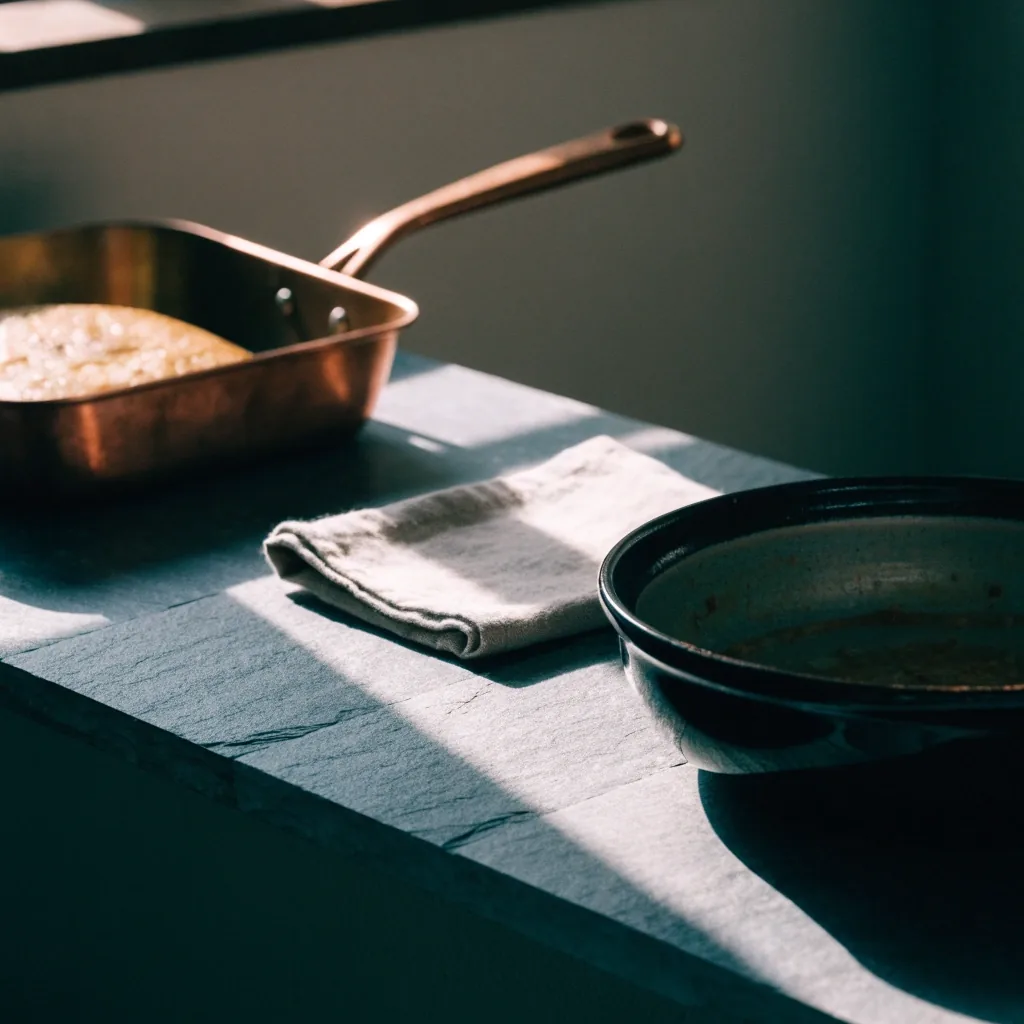
A washoku kitchen journal
A home cooking journal for traditional Japanese meals
Text-first notes on washoku cooked at home: tamagoyaki folded in a rectangular pan, miso soup built from dashi, onigiri shaped by hand.
A reading journal for people cooking dinner on a weeknight
This is a text-first recipe journal about washoku cooked at home, written for households rather than restaurant kitchens. The pages here treat recipes as explanations: what a step is for, why the order matters, and where you can safely change something to suit what your own table eats.
Nothing on this site is sold. Recipes, kitchen tips and culinary history notes are here to be read, tried and adjusted. If a method fails in your kitchen, the contact page is the right place to say so.
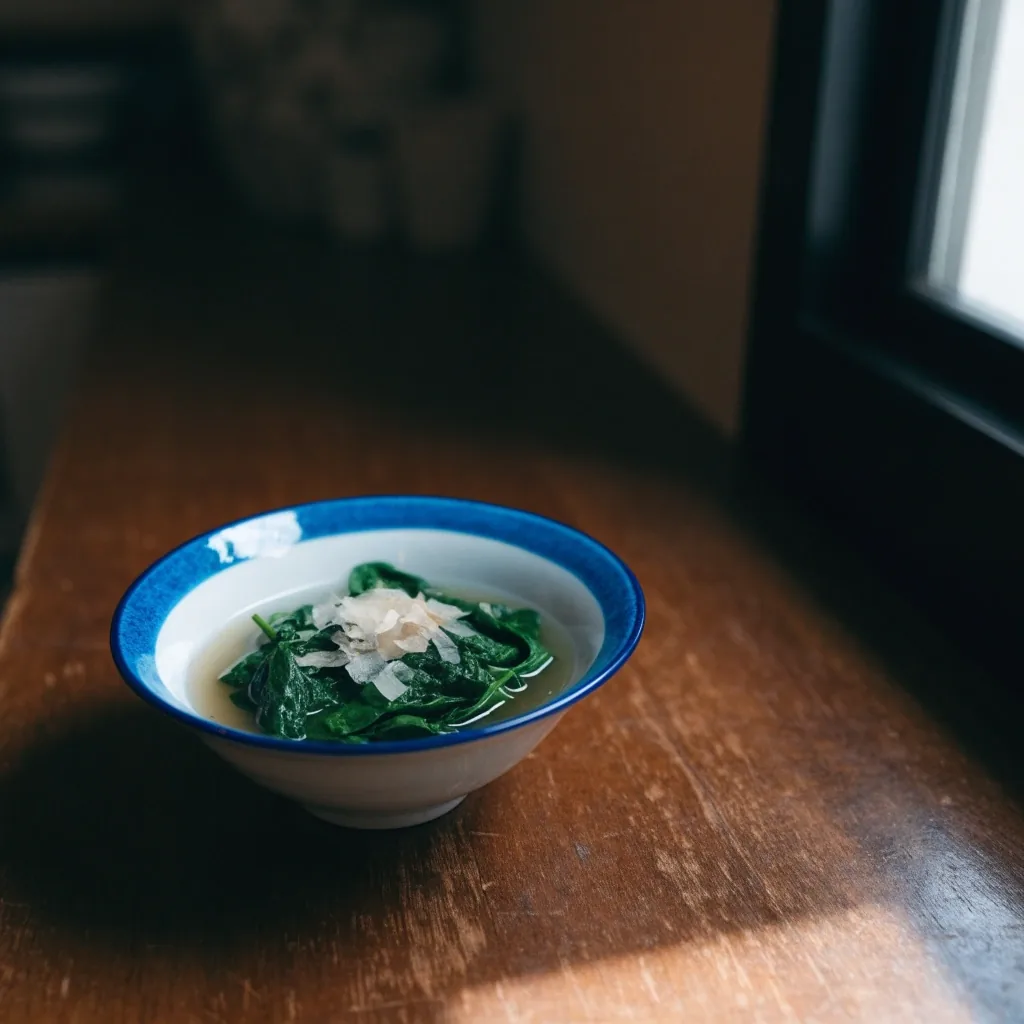
A dressed side dish, shot the way this journal photographs everything: one object, cool light, a lot of air around it.
Everyday home meals
Where the cooking starts: dashi, rice, and one good side
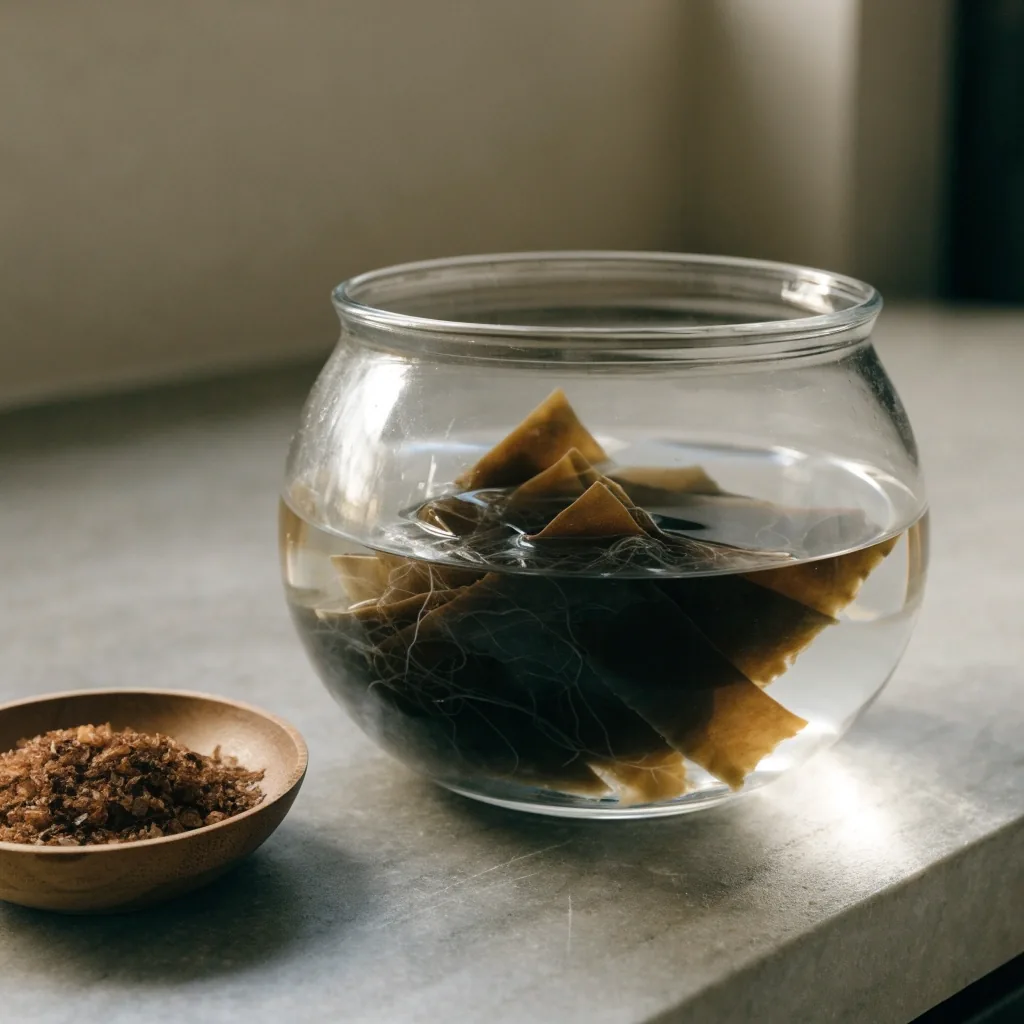
Dashi first
Kombu steeped in cold water, heated gently to the edge of a simmer and lifted out before a hard boil, then katsuobushi added and strained once it sinks. Instant dashi is a reasonable shortcut midweek; the homemade version reads cleaner in clear soups.
Every washoku meal rests on a few quiet foundations. Get two of the three below right on a given evening, and the table already feels like katei ryori rather than a set of assembled parts.
Rice
Rinsed until the water runs nearly clear, then rested covered before it cooks and rested again after.
Short grain
One good side
Ohitashi with greens squeezed dry, or a quick aemono tossed with toasted sesame while the rice steams.
Served cold
Miso soup
Dashi first, then whatever needs cooking, then miso dissolved off the boil so the aroma stays in the bowl.
One bowl each
Tamagoyaki: the daily test of pan control
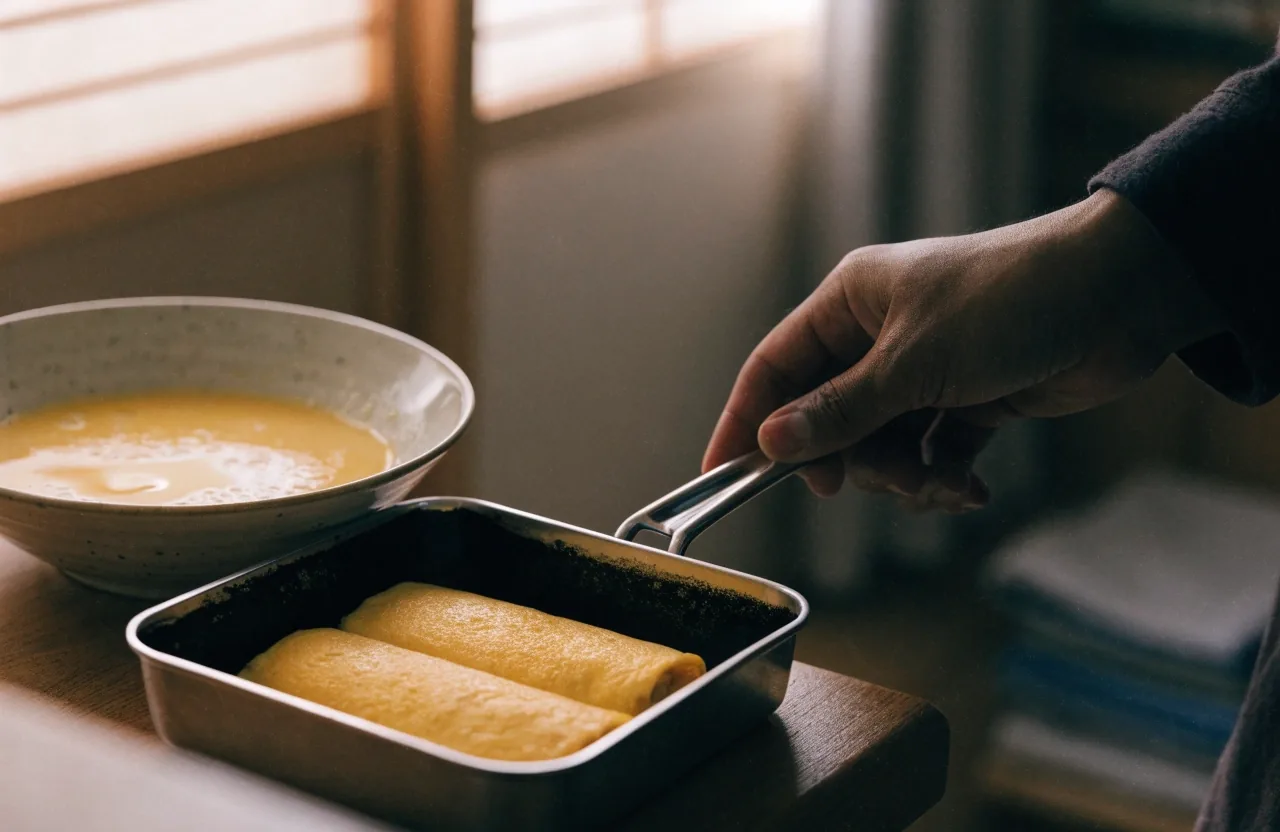
Tamagoyaki looks simple in photographs and behaves differently in a hot pan. Thin layers of seasoned egg are poured into a rectangular pan, rolled toward you, and then the empty space is refilled and rolled again. The result is a folded log rather than a scramble, and the shape comes from repetition rather than force.
Sweetness is the variable that divides households. Some kitchens add sugar and mirin, others keep it savory with dashi and a pinch of salt. Neither is the correct version. Roll it loosely while you learn the motion — a cracked first attempt still slices into a fine breakfast or a lunch box the next morning.
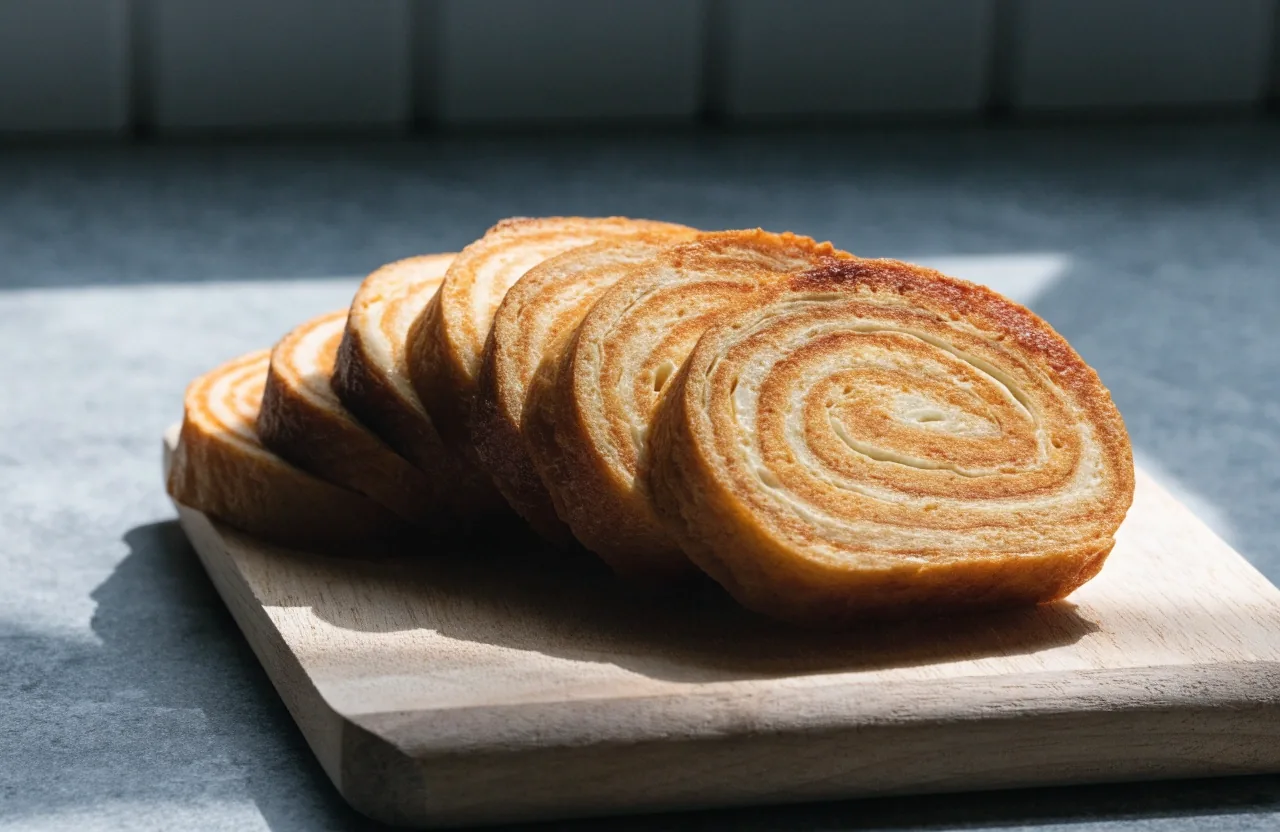
Cut a slice open to check the fold. Tight spiral, distinct layers, no browning on the face.
What actually changes the result
- Pan heat held low and even — a pan that is too hot sets each layer before it can be rolled.
- A thin film of oil between layers, wiped on rather than poured.
- Patience on the first two rolls; speed only helps once the motion is familiar.
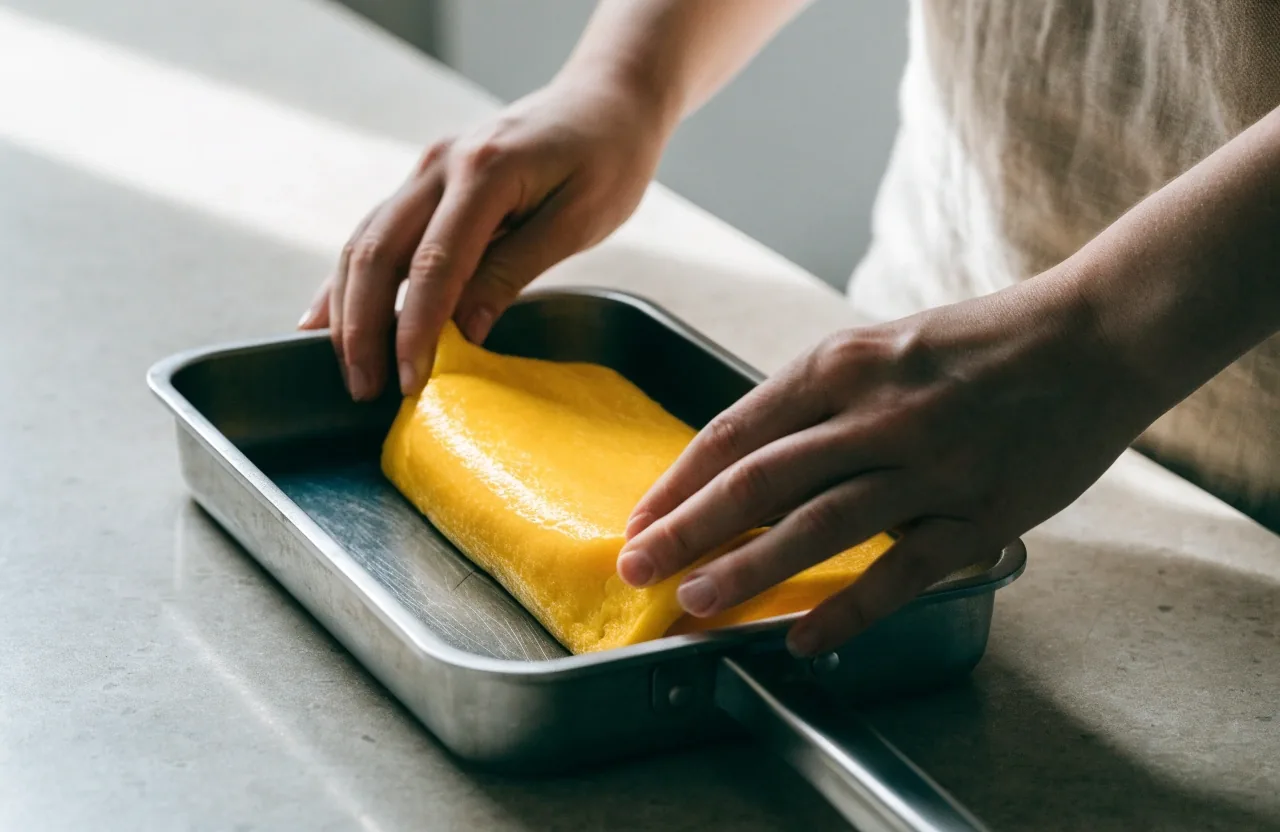
The motion matters more than the recipe. Two rolls in the same pan teach it faster than reading about it.
Ichiju sansai
Miso soup without a fixed formula
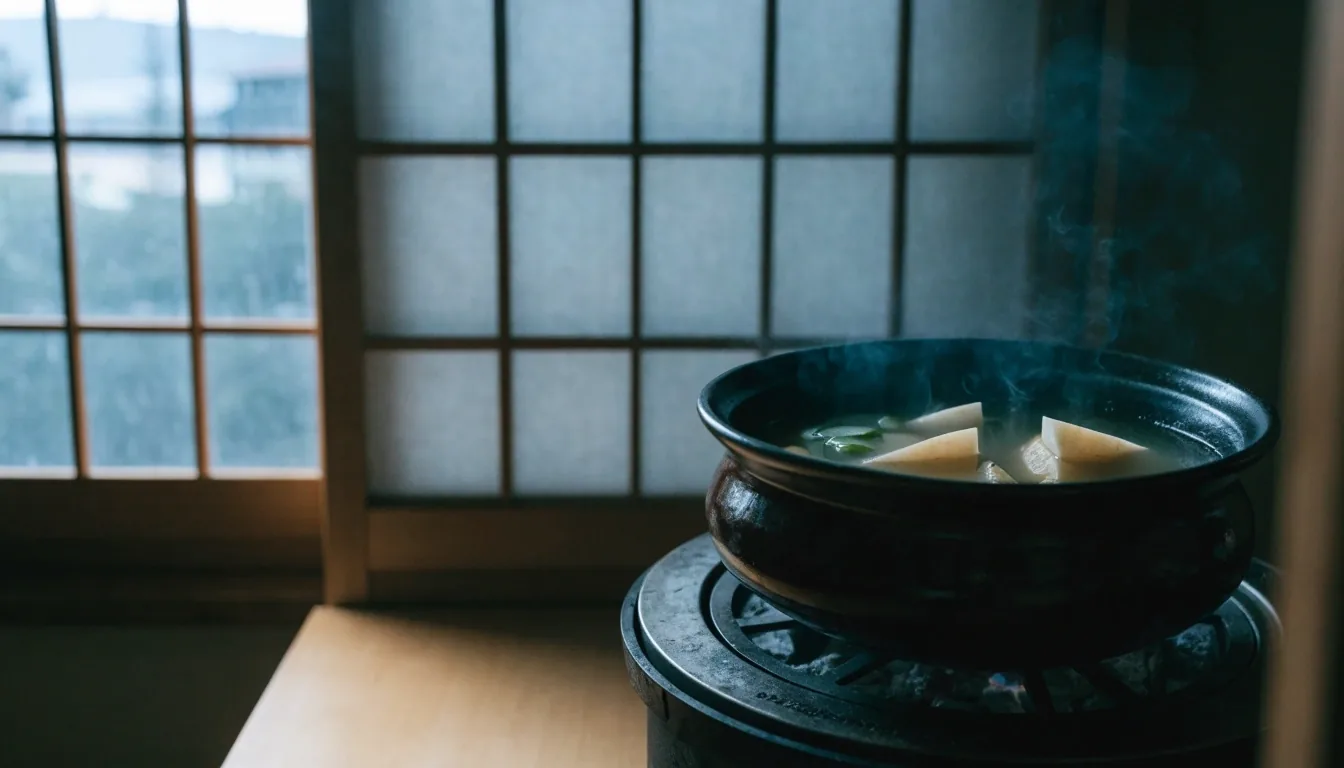
There is no single correct miso soup, only a reliable sequence. Dashi comes first, then the solids that need cooking, then the miso is dissolved off the boil so its aroma stays in the bowl. Tofu, wakame and seasonal vegetables are common, and so is using whatever is already in the refrigerator.
The soup belongs to ichiju sansai, the one-soup-three-sides pattern that keeps a Japanese home meal balanced without turning dinner into a production. Start with 1.5 to 2 teaspoons of miso per bowl and adjust after tasting the broth, since pastes vary a good deal in saltiness. A lighter paste can take more; a dark, long-aged one often needs less.
Included by default
Rice, soup, and one or two side dishes. Usually a pickle or something vinegared to cut the salt.
Not required at all
A main dish is optional on an ordinary night. A good side and a bowl of soup already carry the meal.
Rice balls, mixed rice, and using the pot well
Both dishes below answer the same household question: what do we eat when time is short and we still want something warm and made here?
Onigiri is the most forgiving dish in this journal. Warm rice pressed into a triangle or a cylinder, a filling of salmon, umeboshi or kombu in the middle, and a light salt rub on your hands.
Onigiri, shaped by hand
Keep the pressure gentle so the grains stay distinct. Wrap in a linen cloth rather than plastic if you are eating them the same day.
Warm rice
Takikomi gohan
Vegetables, a little soy and mirin cooked with the rice in one pot, so the whole meal comes off a single burner with nothing to coordinate.
One pot
Rinsing and resting
Rinse until the water is nearly clear, soak briefly, and rest the rice covered after cooking. This is most of what keeps grains fluffy for shaping.
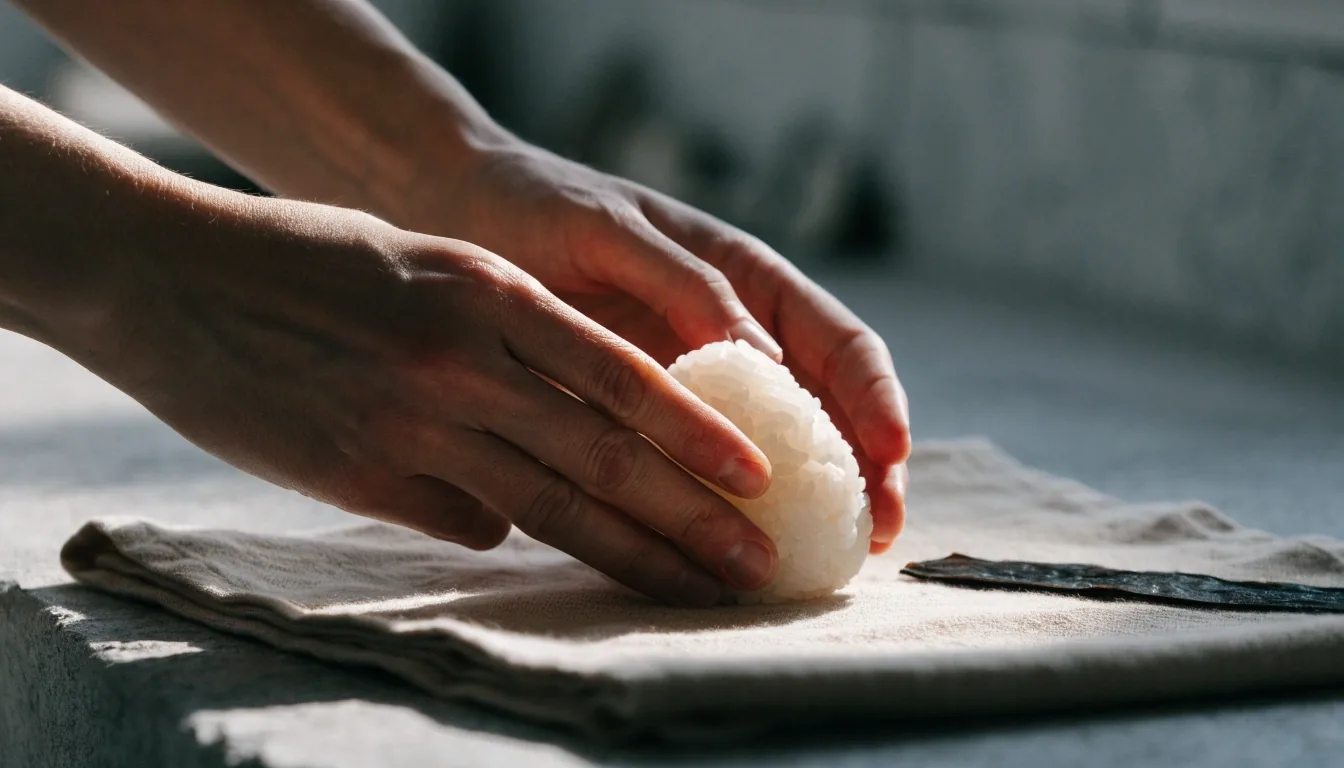
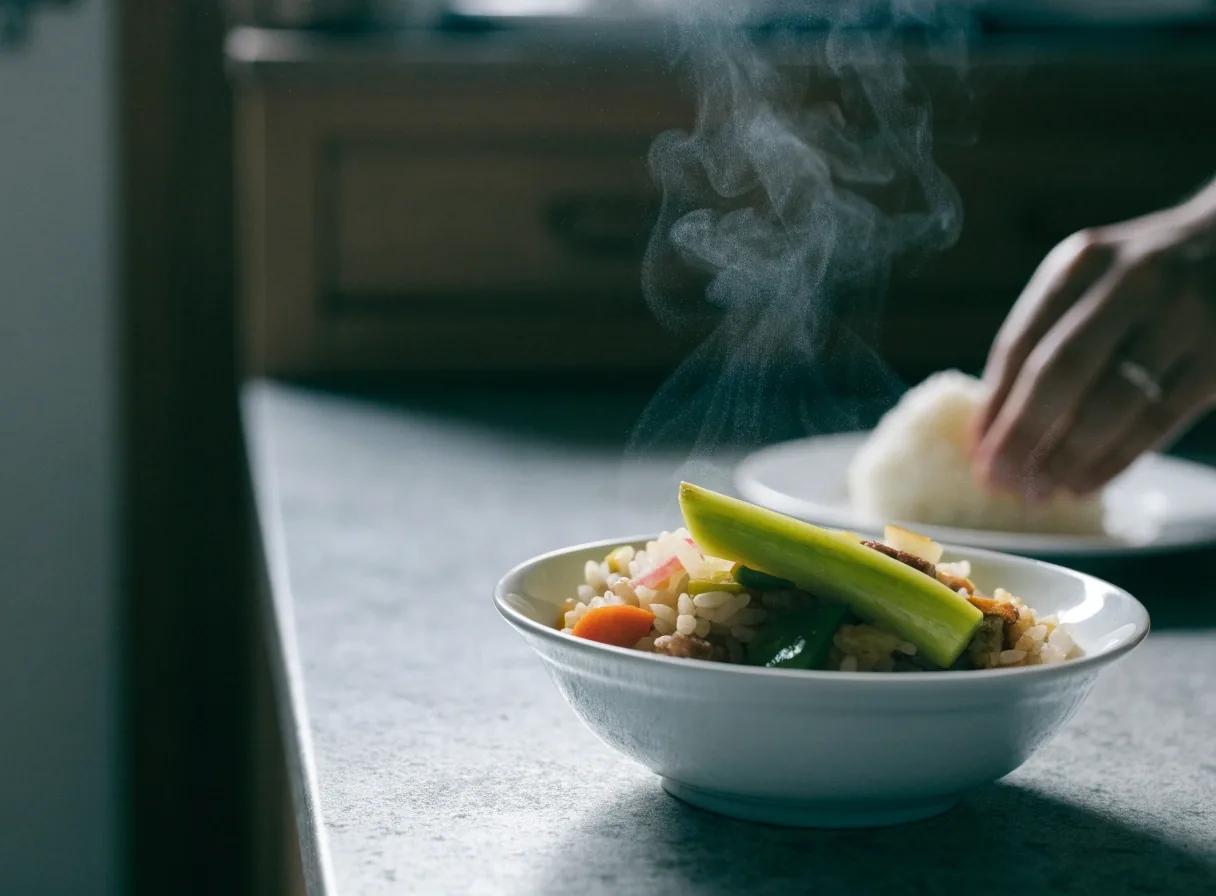
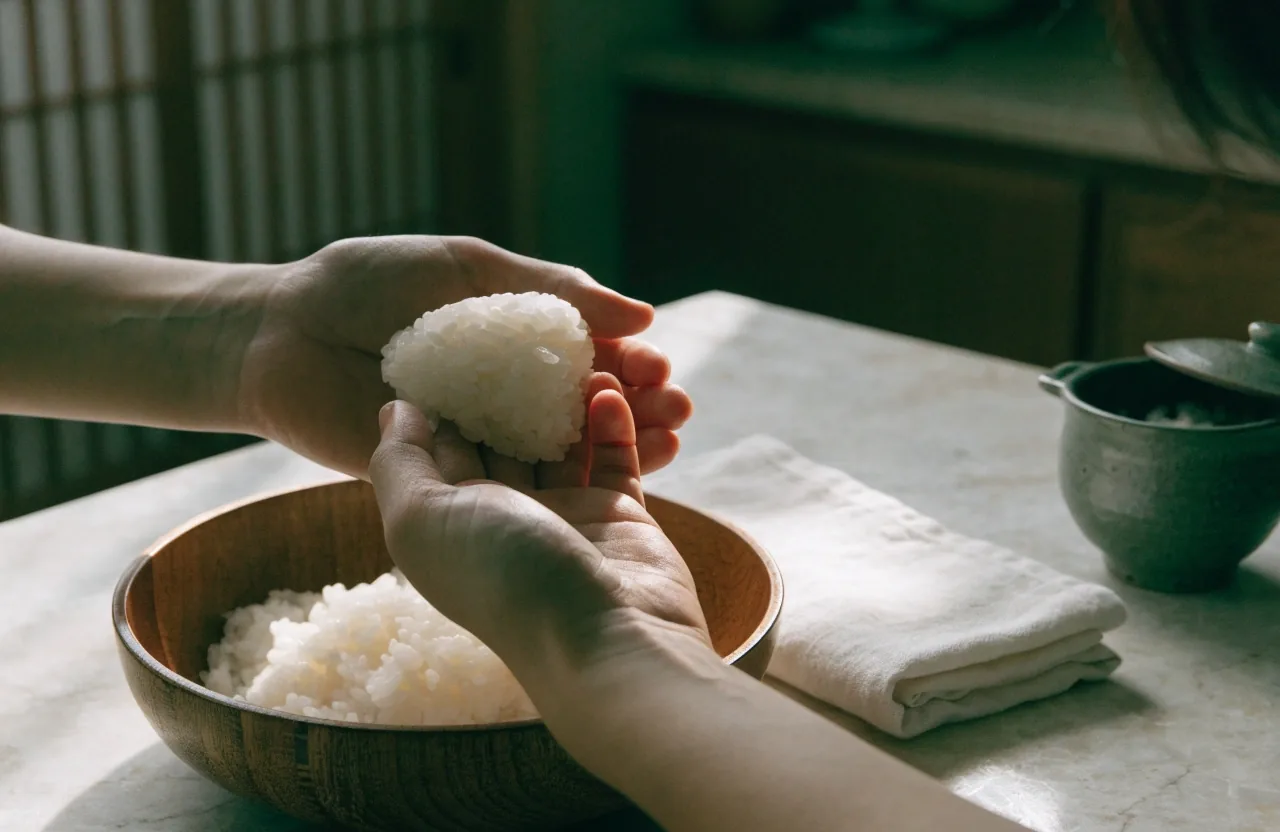
Three variations on the same pot of rice, photographed on the same counter at the same hour.
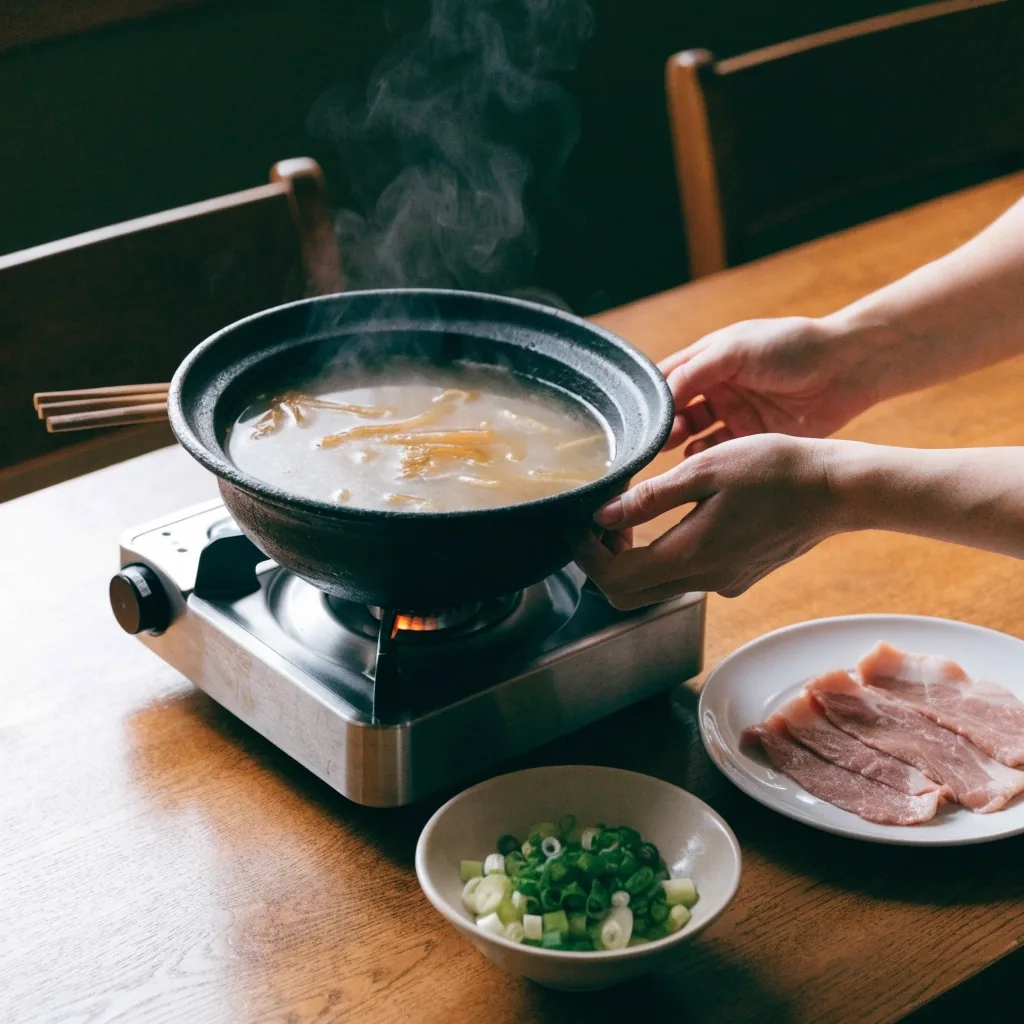
Shabu-shabu and nabe nights at home
Hot pot is the meal this journal recommends when people want to cook together rather than for each other. Paper-thin slices of meat are swished through hot broth for a few seconds, then eaten with vegetables and a dipping sauce that balances acidity against nuttiness.
The broth stays clear because the cooking happens in seconds, not minutes. Nabe nights work in small apartments and at large tables alike, and they clean up more easily than the number of ingredients suggests. Set everything out before anyone sits down — that is the whole technique.
Seasonal cooking guide
Seasonal cooking and the idea of shun
Shun is the moment an ingredient tastes most like itself, and it shapes how Japanese home cooks plan a week. Cooking with the season is less a rule than a way to keep meals varied without buying much.
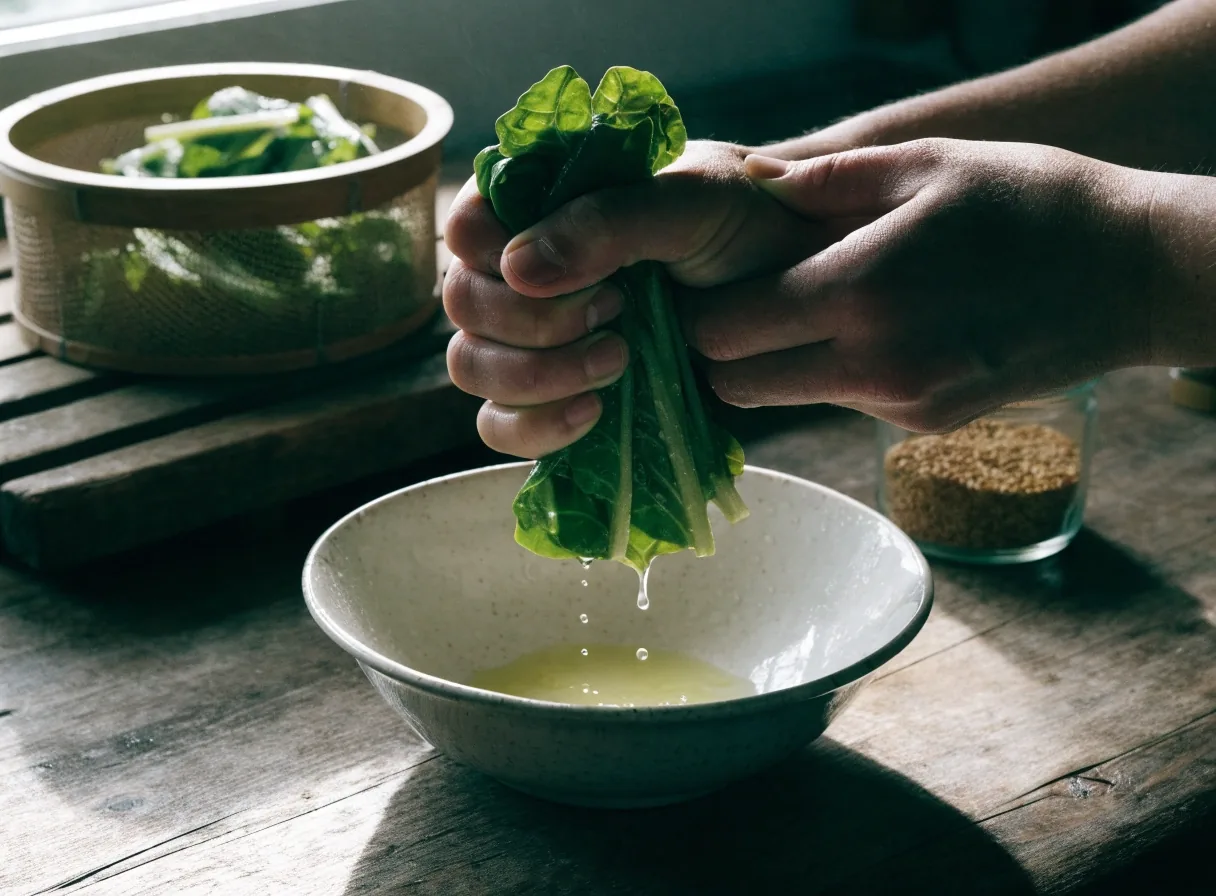
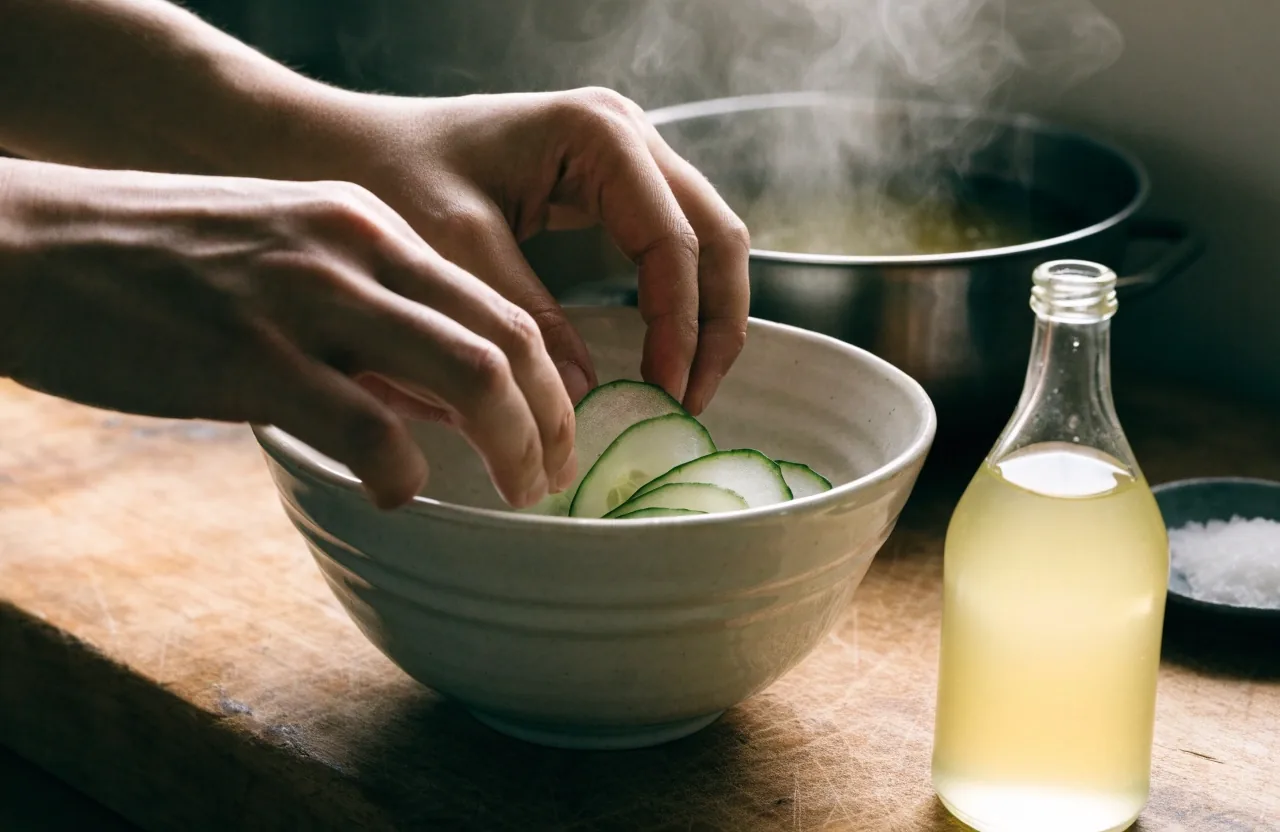
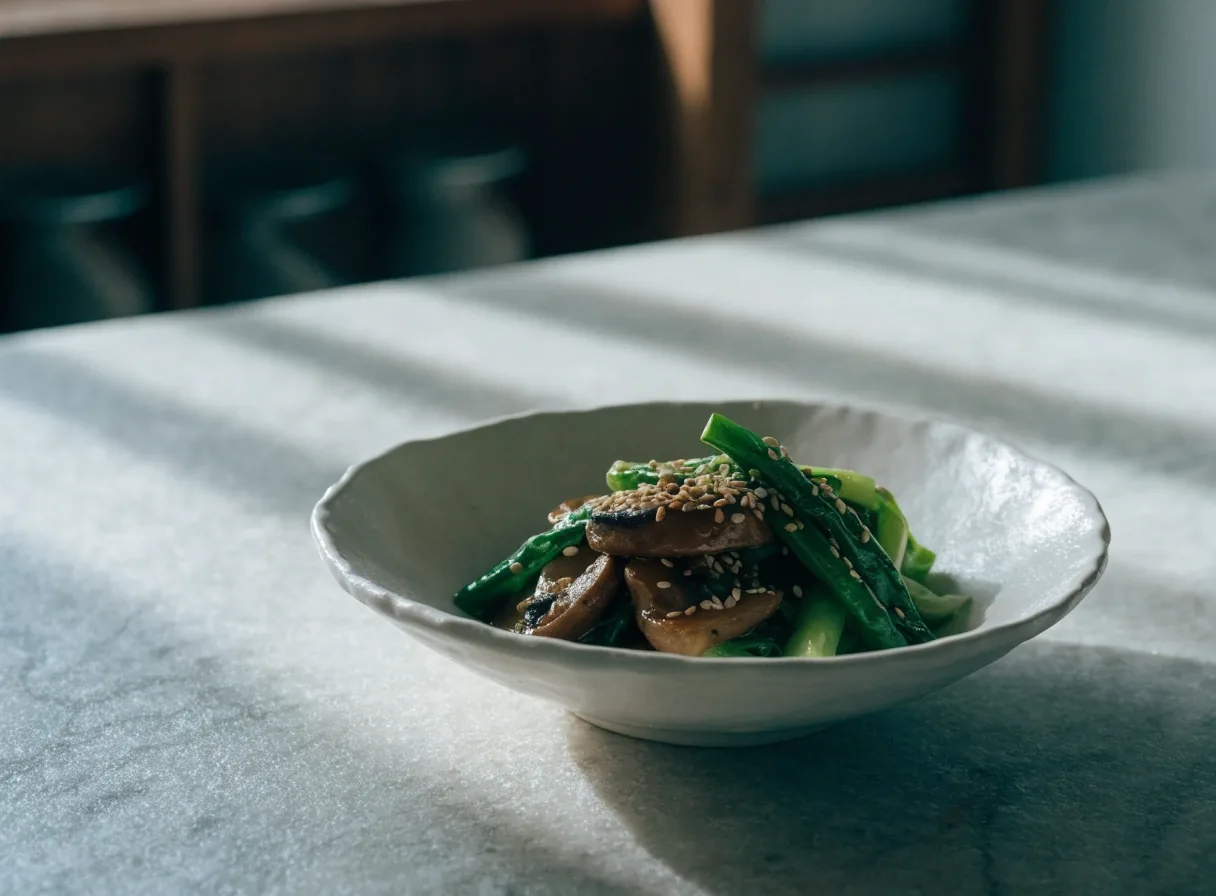
Four side dishes, one counter, one hour of light. The point of the seasonal guide is the repetition, not the styling.
Culinary history blog
What kaiseki can teach an everyday kitchen
A small portion served with intention teaches more about home cooking than a large one served quickly.
Kaiseki belongs to formal dining and tea ceremony tradition, with careful plating and restrained seasoning, and most of us are not cooking that at home. What transfers is the attention: a small portion served with intention, a garnish that signals the season, a bowl of soup that arrives hot.
Keeping one element deliberately plain — plain rice next to a seasoned dish — is a habit worth borrowing. It is also a reminder that home cooking has its own standards, and that they were never lower than a restaurant's, only different.
A tool worth knowing before you cook
A rectangular pan is the difference between a rolled omelette and a folded one. It is not required to start, but it explains the shape everyone recognizes.
British kitchens, Japanese methods
Readers of this journal often cook in the UK, where the oven does much of the work and the kettle is always on. Rice in a covered pot on the hob, a quick dashi from a sachet before dinner, fish under a hot grill instead of over charcoal — the methods slot in more easily than people expect.
Comfort food ideas cross over too, from a baked custard to a bowl of rice with a soft egg on top. Baking notes UK readers send in tend to concern flour, oven temperature, and how a sponge behaves in a damp climate.
How to read a recipe in this journal
If a technique fails in your kitchen, that is useful information. Write it down, and send a note if the method still does not make sense after a second attempt.
Ingredients in order
Listed in the order they are used, so you can read straight down the page while you cook.
Quantities stay loose
Miso, soy and mirin are approximate where taste should decide. Start light and add more after tasting.
Why the step matters
Method notes explain the reason behind a step so you can judge for yourself when to deviate.
Where a dish belongs to a specific season or occasion, that context appears alongside the steps rather than in a separate index. Family dinner recipes in this journal are written for a Tuesday, not for a photograph.
Questions readers send in
Short answers to the things people ask most often before they start cooking from this journal.
What is the easiest way to build a traditional Japanese dinner at home? Open Close
Cook rice, make one soup, and prepare one side. Add a simple main such as tamagoyaki or grilled fish and you have ichiju sansai without a long ingredient list.
How do I make dashi from scratch, and when is instant dashi acceptable? Open Close
Steep kombu in cold water for 20 to 30 minutes, heat it gently, remove it before a hard boil, then add katsuobushi and strain. Instant dashi is a reasonable shortcut on a weeknight; homemade dashi has a cleaner, lighter taste in clear soups.
How do I keep rice fluffy for onigiri or mixed rice? Open Close
Rinse until the water is nearly clear, soak briefly, and rest the rice covered after cooking. Use a light hand when shaping so the grains stay separate.
What is the difference between washoku, katei ryori, and restaurant-style Japanese food? Open Close
Washoku describes Japanese cooking and its conventions, katei ryori is the home version of it, and restaurant cooking typically uses richer seasoning, more components, and plating you would not repeat at home.
My tamagoyaki keeps tearing. What should I change first? Open Close
Lower the heat before anything else. A layer that sets too fast will crack when rolled, and the fix is usually temperature rather than technique. Wipe a thin film of oil between layers and pour less egg than you think you need.
Start with one meal this week
Pick a single recipe, cook it twice in the same week, and note what changed. Most washoku dishes reward repetition more than reading, and the second attempt is usually where the texture clicks. Kitchen tips are the place to look when something goes wrong in the middle.
Where to go next
-
Everyday Washoku Recipes
Tamagoyaki, miso soup, onigiri and the side dishes that hold a meal together.
-
Seasonal Cooking Guide
The year month by month, with what tastes best when.
-
Kitchen Tips & Comfort Food Ideas
What to do when something goes wrong halfway through.
-
Culinary History Notes
Where the dishes came from and why they stayed.