
A donabe and a rectangular tamagoyaki pan on a bare stone counter in cold morning light

Recipes from the home kitchen

Everyday washoku recipes for family dinners

Dishes that turn up on a weeknight, written for ordinary pans and one good knife.

Weeknight Short method No special tools
Start with tamagoyaki

What this page is for

These are the dishes that appear most often in a Japanese home kitchen, written so you can cook them on a weeknight with ordinary equipment. Nothing here needs a specialist shop, and nothing is presented as a finished restaurant plate. Each recipe includes a short note on texture, seasoning, and the mistake most cooks make on the first try.

This home cooking blog keeps the methods plain and repeatable. Measurements are given in spoons and millilitres rather than weights where a spoon is easier to judge by eye, and every step says what the pan, the rice, or the broth should look like at that moment. Read a recipe through once before you start: most of the trouble in washoku comes from rushing a stage that only takes a minute.

Before you begin

  • A Cook short-grain rice if the dish calls for rice. Long-grain absorbs differently and the texture notes will not match.
  • B Keep dashi light. A broth that already tastes strong will flatten every seasoning you add to it.
  • C Season at the end where you can. Miso, vinegar, and salt are easiest to judge in the last minute of cooking.
  • D Rest before cutting. Rice dishes and rolled omelettes both hold their shape better after a minute off the heat.
A rolled tamagoyaki sliced on a wooden board with one slice fanned open to show the layers

Tamagoyaki, layer by layer

A rectangular pan makes the rolling easier, though a round frying pan works if you keep the layers narrow. Beat three eggs with a tablespoon of dashi, a teaspoon of mirin, and a pinch of salt for a savory version, or add half a teaspoon of sugar for the sweeter style common in lunch boxes.

Heat the pan over medium-low, oil it lightly, and pour a thin layer. As it sets, roll it to one side and add the next layer to the empty space. The final log rests for a minute before slicing so the layers hold.

Where it usually goes wrong

The pan is too hot and the first layer browns before it can be rolled. If the egg sizzles the moment it lands, lift the pan off the heat for a few seconds, wipe it, and start again at a lower setting. A pale, even layer rolls; a browned one cracks and tastes of frying rather than egg.

The seven dishes on this page

Each row links to the method below. Read the texture note before the ingredients, since it tells you what you are aiming for once the cooking is done.

Tamagoyaki, layer by layer Three eggs, one pan
Miso soup in ten minutes Broth, miso, tofu
Onigiri: shaping, filling, and salt Warm rice, light hands
Ohitashi that stays bright Blanched greens, chilled
Takikomi gohan in one pot Rice and vegetables together
Sunomono and the cold side dish Vinegar, salt, cucumber
Shabu-shabu at a family table Everyone cooks their own

The daily bowl

Miso soup in ten minutes

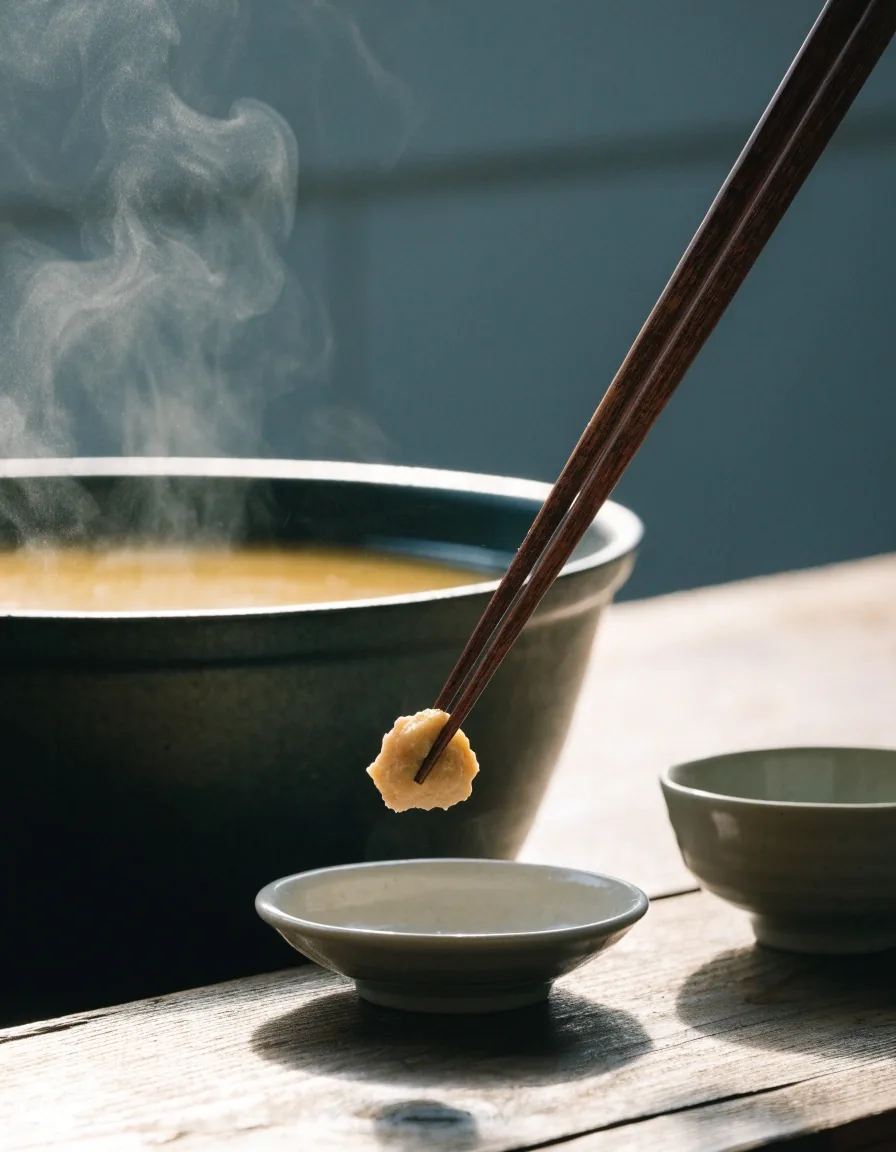
Bring 400 ml of dashi to a gentle heat and add anything that needs cooking, such as sliced daikon or small pieces of potato. When they are tender, lower the heat and dissolve 1.5 to 2 teaspoons of miso per bowl in a ladle of the hot broth, then return it to the pot.

Add tofu and wakame at the end so they stay intact. Do not boil the soup after the miso goes in, or the aroma flattens. The bowl should smell sweet and fermented at the table, not salty and cooked.

Miso varies a lot between tubs. Red miso is saltier and holds up with root vegetables; white miso is sweeter and suits a bowl with tofu and wakame. Start at the lower end of the spoon range, taste, and add more through the ladle rather than the pot, so you never have to rescue an over-seasoned batch.

A spoonful of miso paste being lowered into a pot of dashi beside a ceramic bowl

Dissolve the miso in a ladle of hot broth, never straight into a boiling pot.

A hand-shaped onigiri on a linen cloth with a strip of kombu beside it

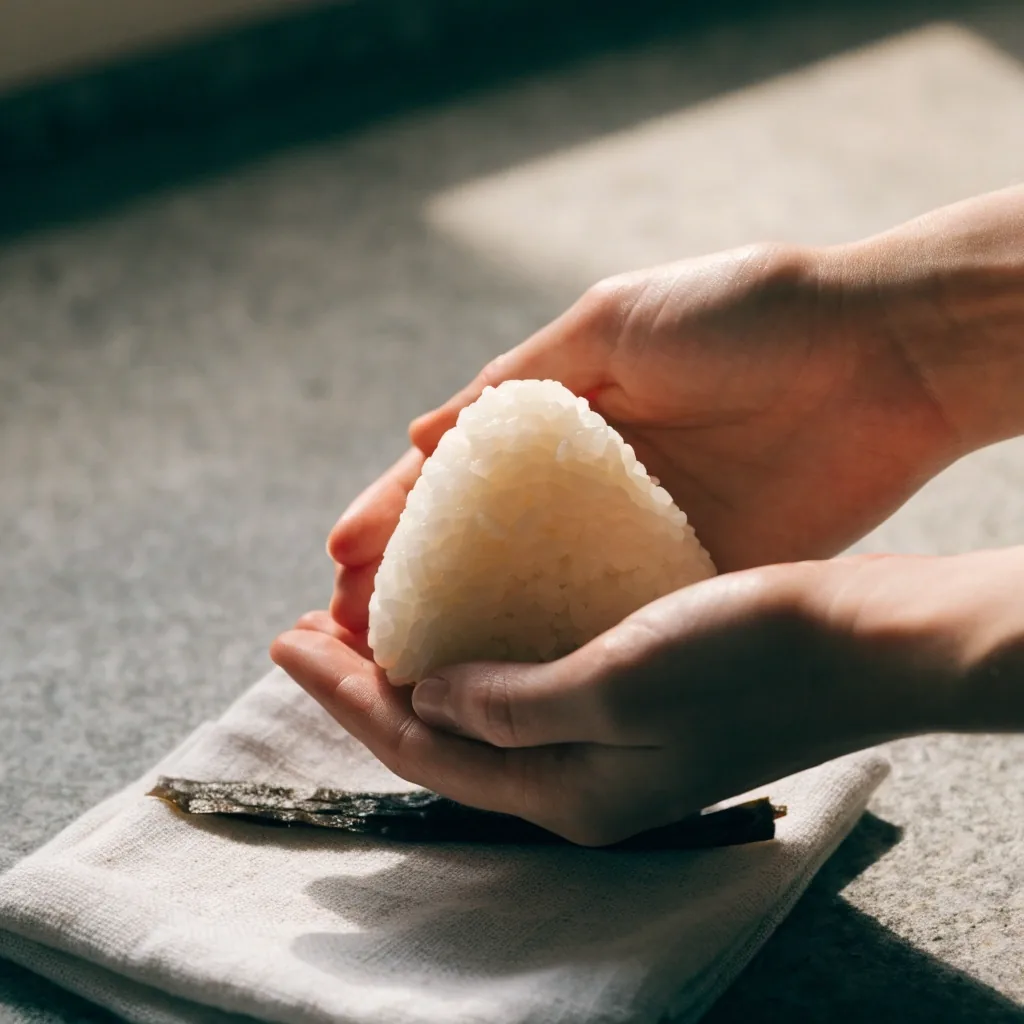
Keep the pressure light. A tightly packed ball turns gluey as it cools.

Onigiri: shaping, filling, and salt

Cook short-grain rice and let it cool until it is warm to the touch rather than hot. Wet your hands, rub a little salt across your palms, and take a portion of rice about the size of a small fist. Make an indentation, place salmon, umeboshi, or kombu inside, and close the rice around it.

Press into a triangle with three turns of your hand, keeping the pressure light. Wrap in nori just before eating. If the rice is still steaming, the nori will go soft within minutes, so it is worth waiting for that first warmth to pass.

On shaping

Cup one hand, keep the other flat, and turn the ball a quarter each time you press. Three turns give you a triangle with soft corners. Salt on your hands seasons the outside of the rice, which is where the flavour is meant to sit.

On filling

Keep the filling small and centred. A tablespoon is plenty for a portion of rice you can close in one hand, and a well-sealed ball will hold together in a lunch box or a pocket for a few hours.

Four cold and dressed side dishes

These four small dishes follow the same habit: cook or salt the vegetable, drive the water out, then dress it. Shot here on the same counter at the same distance, because the only thing that changes between them is what sits in the bowl.

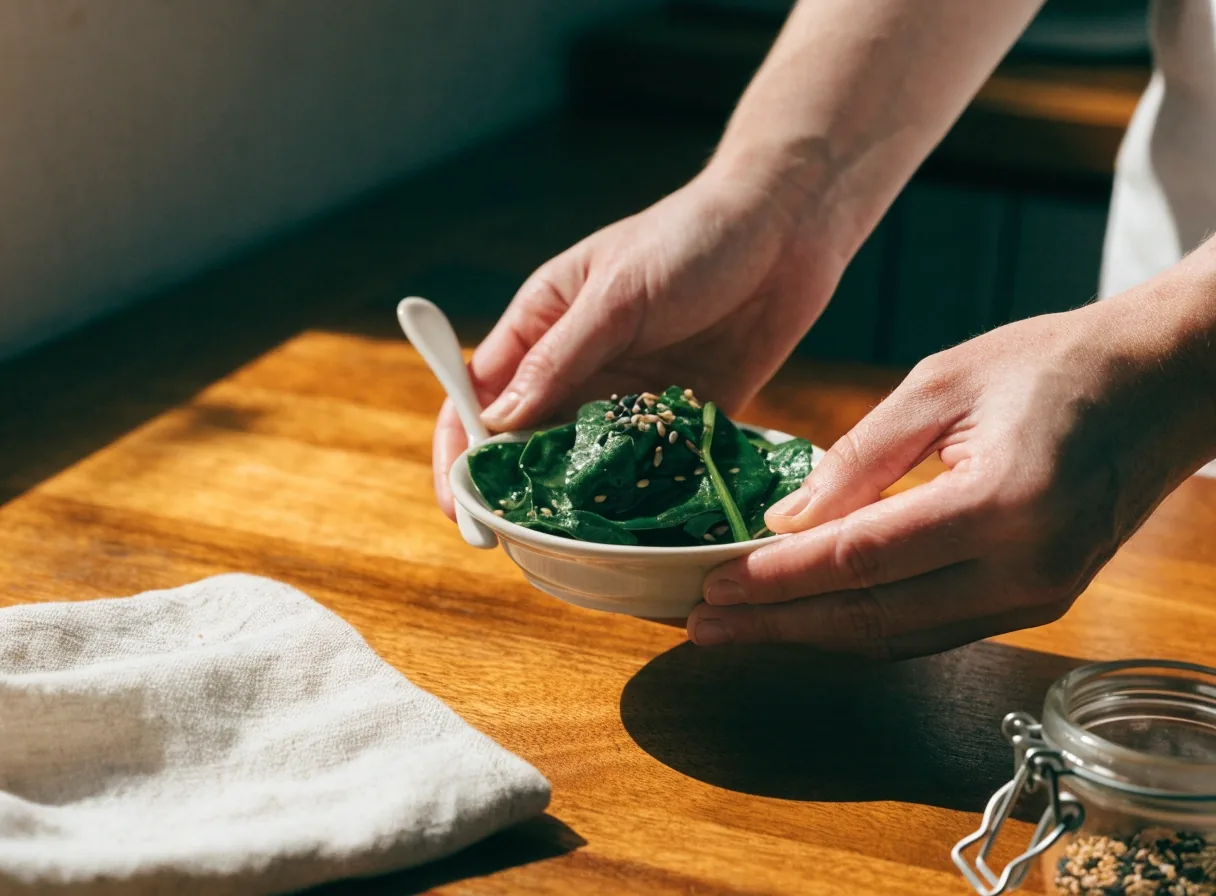
A shallow ceramic dish of chilled spinach ohitashi topped with toasted sesame
Ohitashi that stays bright — squeezed hard, dressed cold.
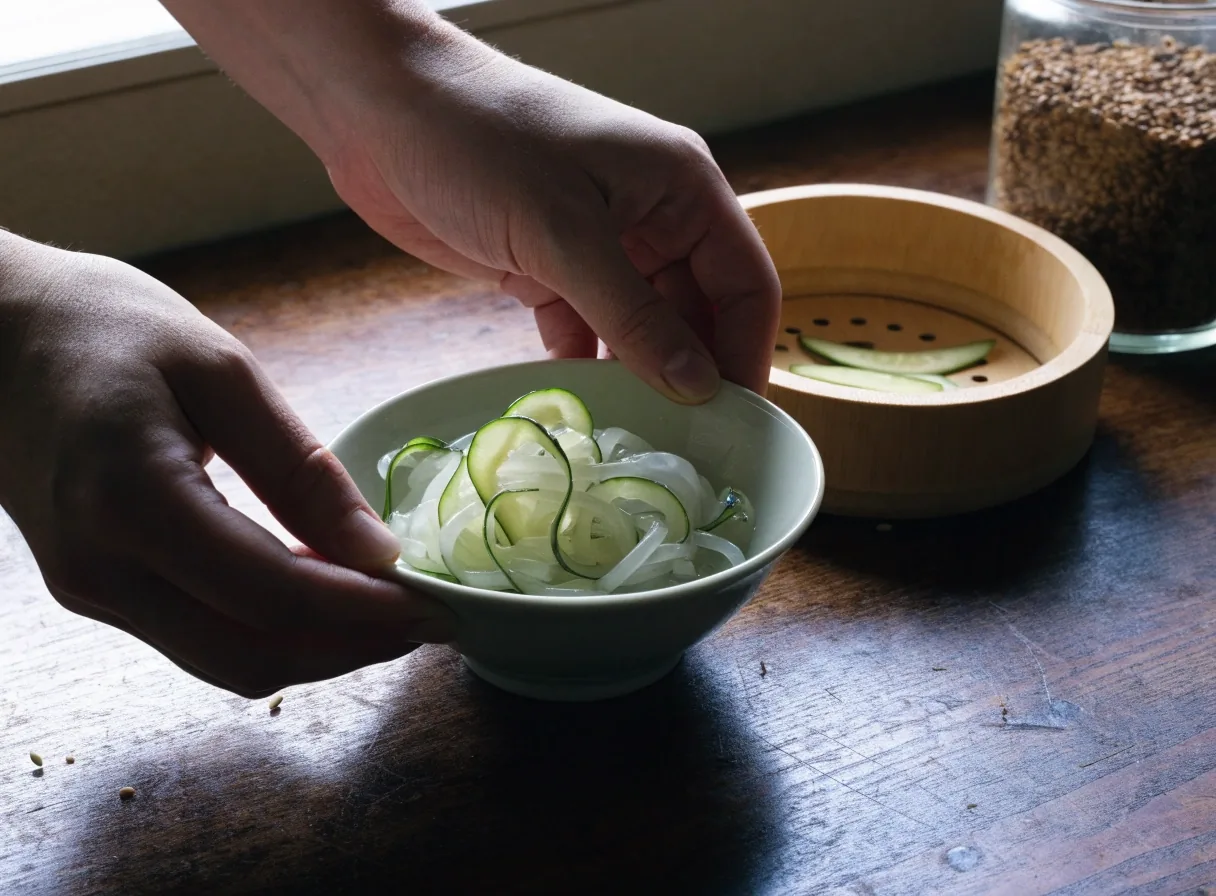
A small bowl of vinegared cucumber sunomono on a stone counter
Sunomono and the cold side dish — vinegar, salt, five minutes.
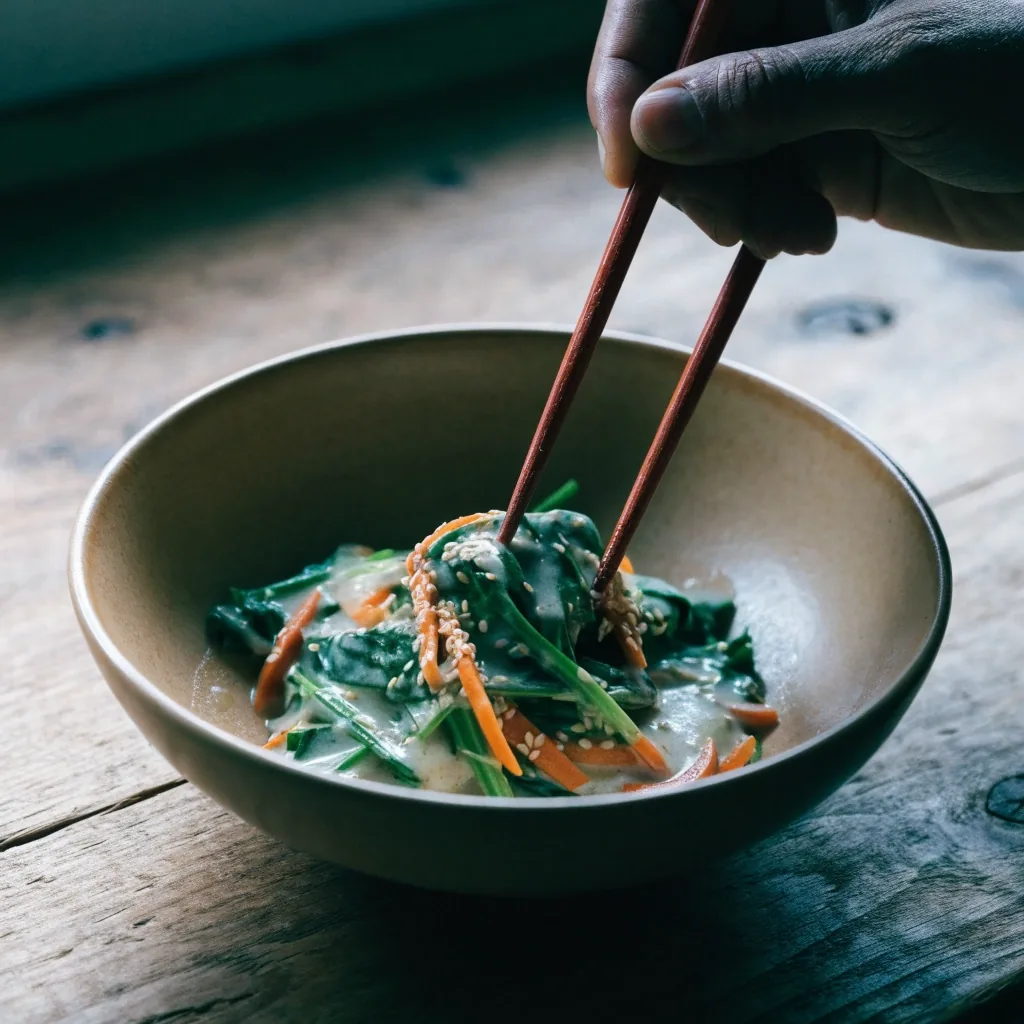
A shallow dish of green beans and carrot in a ground sesame aemono dressing
Aemono: one dressing, many vegetables — the sauce is the whole method.
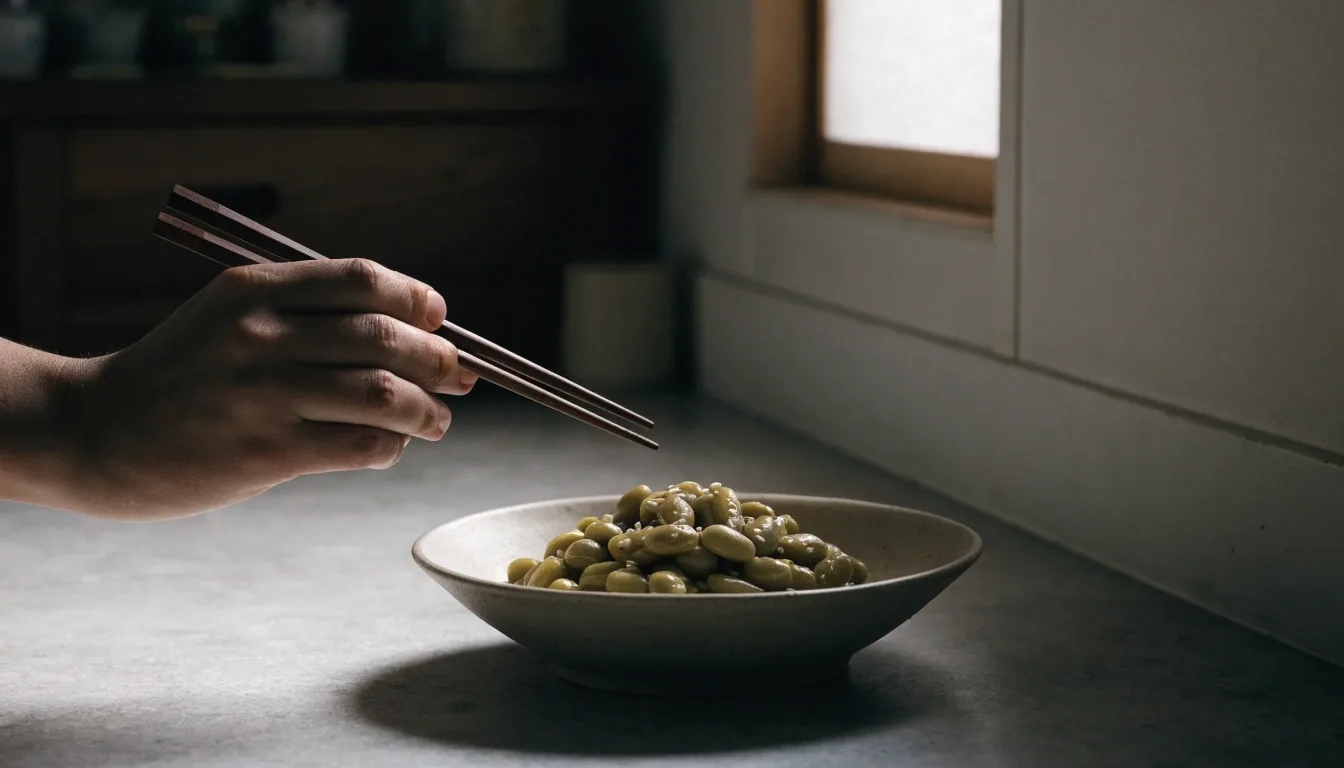
A bowl of simmered tofu and daikon nimono in light broth on a stone counter
Takikomi gohan in one pot — the same habit, one pot deeper.

Ohitashi that stays bright

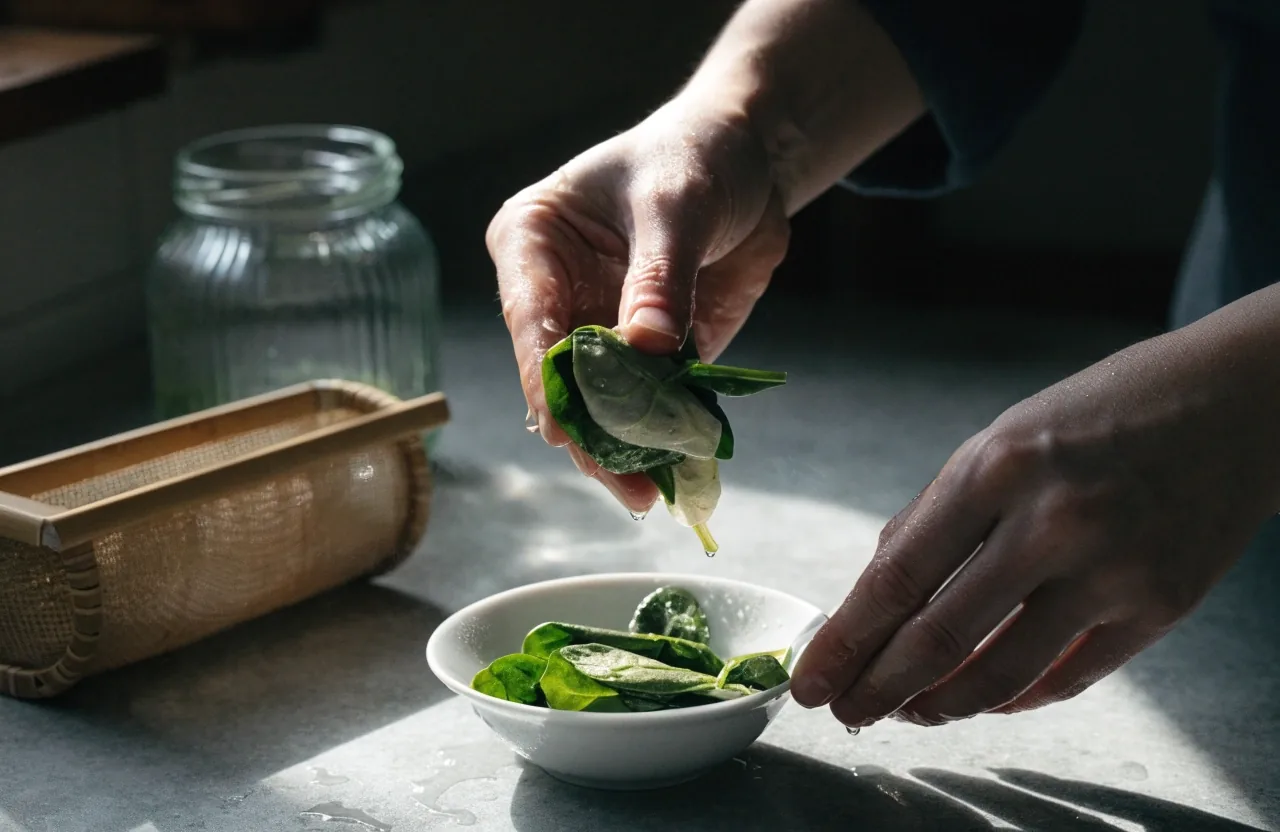
Blanch spinach or another tender green for under a minute in salted water, then transfer it to cold water to stop the cooking. Squeeze it firmly in your hands or in a clean cloth until little water remains; this is the step that keeps the dish from tasting diluted.

Cut into lengths, dress with seasoned dashi, soy sauce, and a little mirin, and chill. A scattering of toasted sesame goes on at the end.

  • Salting the water first keeps the greens tasting of themselves rather than of the dressing.
  • A second squeeze after cutting releases the water the first one missed.
  • Chill for at least half an hour, so the dashi reaches the centre of the bundle, not just the surface.
Aemono: one dressing, many vegetables

The dressing is what makes aemono flexible. Grind toasted sesame seeds, then mix with soy sauce, a little sugar, and enough dashi to loosen it.

The same mixture works with blanched green beans, grated carrot, spinach, or cubes of firm tofu. Add the dressing shortly before serving so the vegetables keep their texture. If the mixture tastes heavy, thin it with dashi rather than water.

Where it usually goes wrong

The dressing is mixed ahead and left standing. Ground sesame thickens as it sits, and a sauce made an hour early will coat the vegetables like paste. Mix it loose, then let the vegetables carry the rest.

Takikomi gohan in one pot

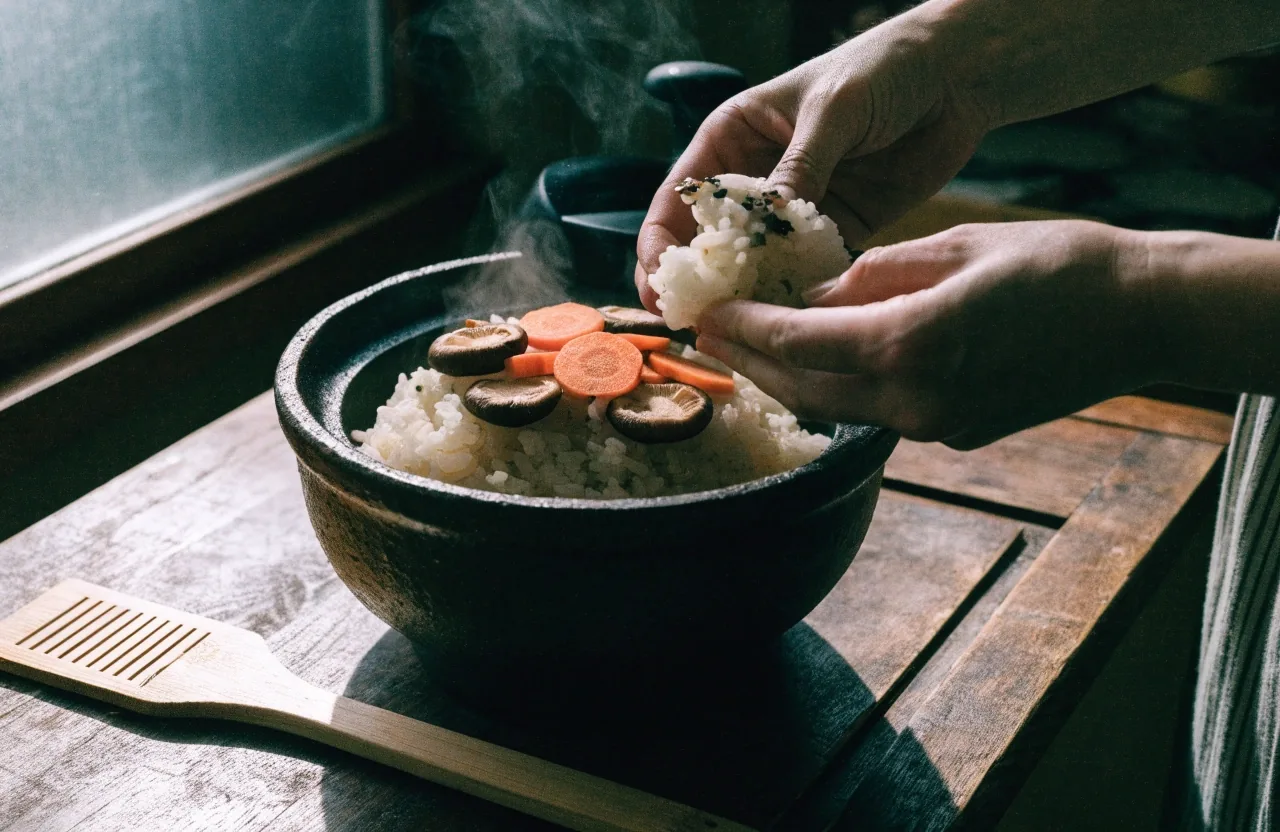
Rinse two cups of rice and place it in the pot with slightly less water than usual, since the vegetables release their own. Add soy sauce, mirin, and a pinch of salt, then scatter sliced carrot, shiitake, and a piece of chicken or fried tofu on top.

Cook as you normally would and let it rest for ten minutes before folding everything together. The grains should be seasoned throughout, not just on the surface. If you taste a plain grain near the edge, add a splash more liquid and rest it again under a lid.

A pot of takikomi gohan with mushrooms, carrot and fried tofu over seasoned rice

Rest before folding. The ten quiet minutes are what season the grain at the centre of the pot.

Sunomono and the cold side dish

Thinly slice cucumber, salt it for five minutes, and squeeze out the water. Dress with rice vinegar, a little sugar, and a pinch of salt. The same formula suits wakame, daikon cut into fine strips, or cooked octopus if you have it. Serve cold.

Vinegared dishes cut through a rich main course, which is why they appear so often alongside fried food. A bowl of sunomono beside a plate of fried pork or chicken is the difference between a heavy meal and one you finish comfortably.

A pot of kombu broth at the centre of a home table with plates of sliced beef, cabbage, mushrooms and tofu around it

Shabu-shabu at a family table

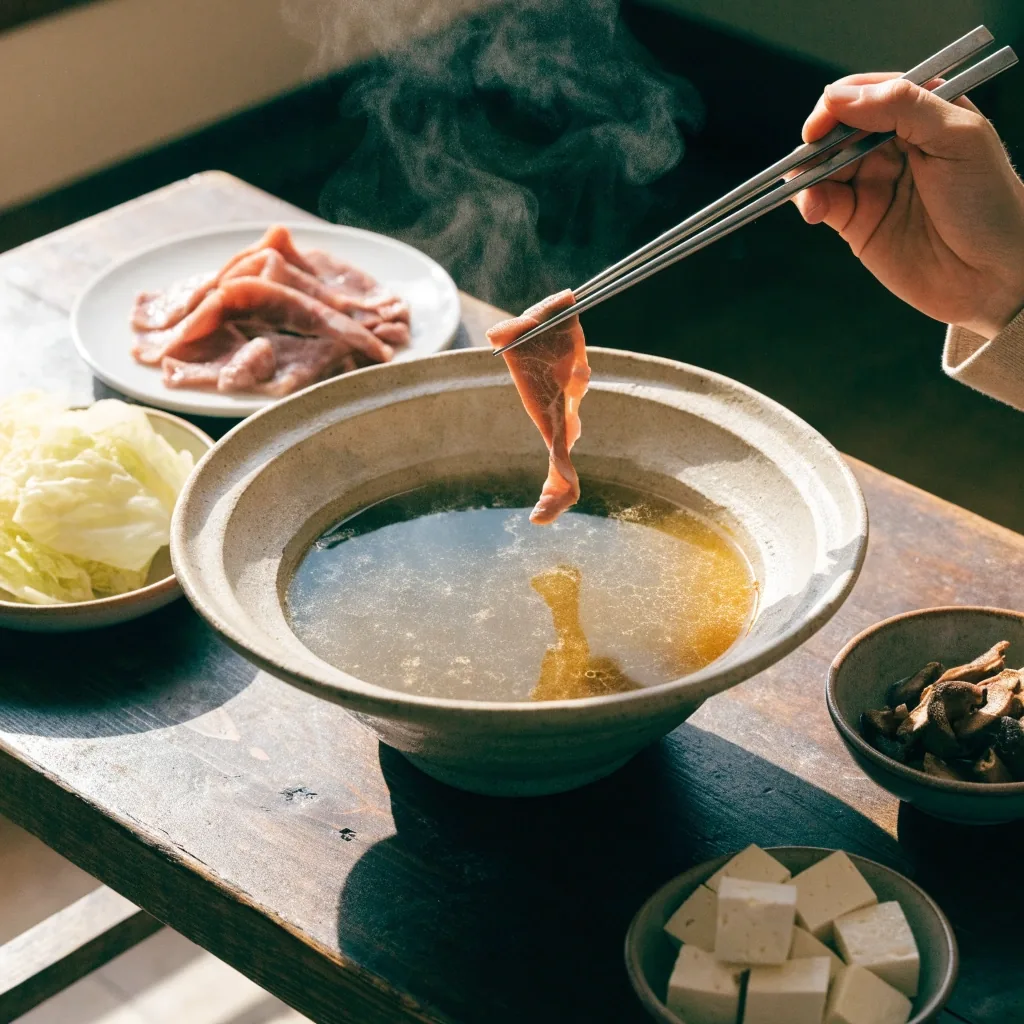
Set a pot of kombu dashi in the middle of the table and keep it at a gentle simmer. Arrange thinly sliced beef or pork, napa cabbage, mushrooms, and tofu on plates. Each person swishes a slice of meat through the broth for a few seconds, then dips it into ponzu or a sesame sauce. Vegetables go in next and take longer. At the end, add cooked noodles or rice to the broth.

It is the least fussy family dinner recipe in this set. The pot cooks in the middle and everyone eats at their own pace, which is why it works on the nights nobody wants to sit down at the same minute.

Where the rest of the notes live

This page holds the core dishes. The kitchen side of the journal holds the smaller habits that make them easier: how to store dashi, what to do with a pan that has gone too hot, and the simple kitchen tips that save a weeknight when the plan slips.

If you want to cook with the season rather than a fixed list, the seasonal cooking guide follows what is worth buying month by month and how the dressing changes with it. The culinary history notes explain where a few of these dishes came from and why the method settled the way it did.

Questions that come up often

Do I need a rectangular pan for tamagoyaki? +

No. A round frying pan works if you keep each layer narrow and roll toward the centre. The shape of the finished log is a little looser, and the slices will not be as even, but the layers still hold after a minute of resting.

How much miso should go into each bowl? +

Between 1.5 and 2 teaspoons for 400 ml of dashi, depending on how salty the miso tastes on its own. Dissolve it in a ladle of hot broth first, taste, and adjust with the ladle rather than the pot so you never over-season a full batch.

Why does my ohitashi taste watery? +

Almost always because the greens were not squeezed hard enough after blanching. Press them in a clean cloth until very little water comes out, then cut and squeeze once more. Dressing a wet bundle only dilutes the dashi.

Can I cook takikomi gohan with brown rice? +

You can, but it takes longer and drinks more water, so add the vegetables later than you would with white rice or they will turn to mush before the grain is done. The seasoning note about tasting a grain near the edge of the pot still applies.

Cook one dish tonight and the rest get easier

Start with the tamagoyaki or the soup over the next few days. Both use the same handful of ingredients, and once the timing of a layer and a simmer is familiar, the rest of these everyday home meals fall into place without a recipe open on the counter.

Ask about a recipe Read culinary history notes

Questions about a step or a substitution are welcome by email at [email protected], Monday to Friday, 9:00 AM to 6:00 PM.