
Journal terms
Terms of Service
These terms set out the conditions for using vitaltidebodycaresit.site. By reading or using the site, you agree to them. The site is an informational cooking journal and provides recipes, tips, and historical notes for reference only.
The short version
- Read, print and cook from anything here for your own kitchen.
- Please do not republish the writing or photographs as your own.
- Cooking results vary with your ingredients, your pans and your day.
- Questions about these terms can go to the journal by email.
Use of the site
You may read, print, and cook from the recipes for personal and household use. That covers the everyday home meals you make for yourself and the family dinner recipes you pass around your own table.
You may not republish substantial parts of the content, resell it, or present it as your own. Short quotations with a link back to the site are permitted, and we are glad when a note from here ends up in someone else's cooking notebook with a credit line.
If you would like to translate a piece, teach from it, or include a passage in a printed collection, write to us first and describe how the material would be used. We read every message and we usually say yes to requests that keep the credit and the link intact.
Content and accuracy
Recipes and notes are prepared with care and tested where possible, but cooking results depend on your ingredients, equipment, and conditions. A donabe that holds heat differently, a dashi brewed a minute longer, a kitchen running warm in August — each of these changes the outcome. The site does not warrant that any recipe will produce a particular result.
The traditional Japan recipes and seasonal cooking guide pages describe methods as they are commonly practised in home kitchens, not as fixed formulas. Where a step is open to interpretation — how long to cook rice before covering it, how much salt belongs in a pickling brine — that is usually because the answer depends on the cook and the season, and we say so rather than pretending otherwise.
Information is provided for general reference and is not professional culinary, medical, or nutritional advice. If you have a health condition, a food allergy, or a dietary restriction, treat the notes here as a starting point for your own reading and speak to a qualified professional before changing how you cook or eat.
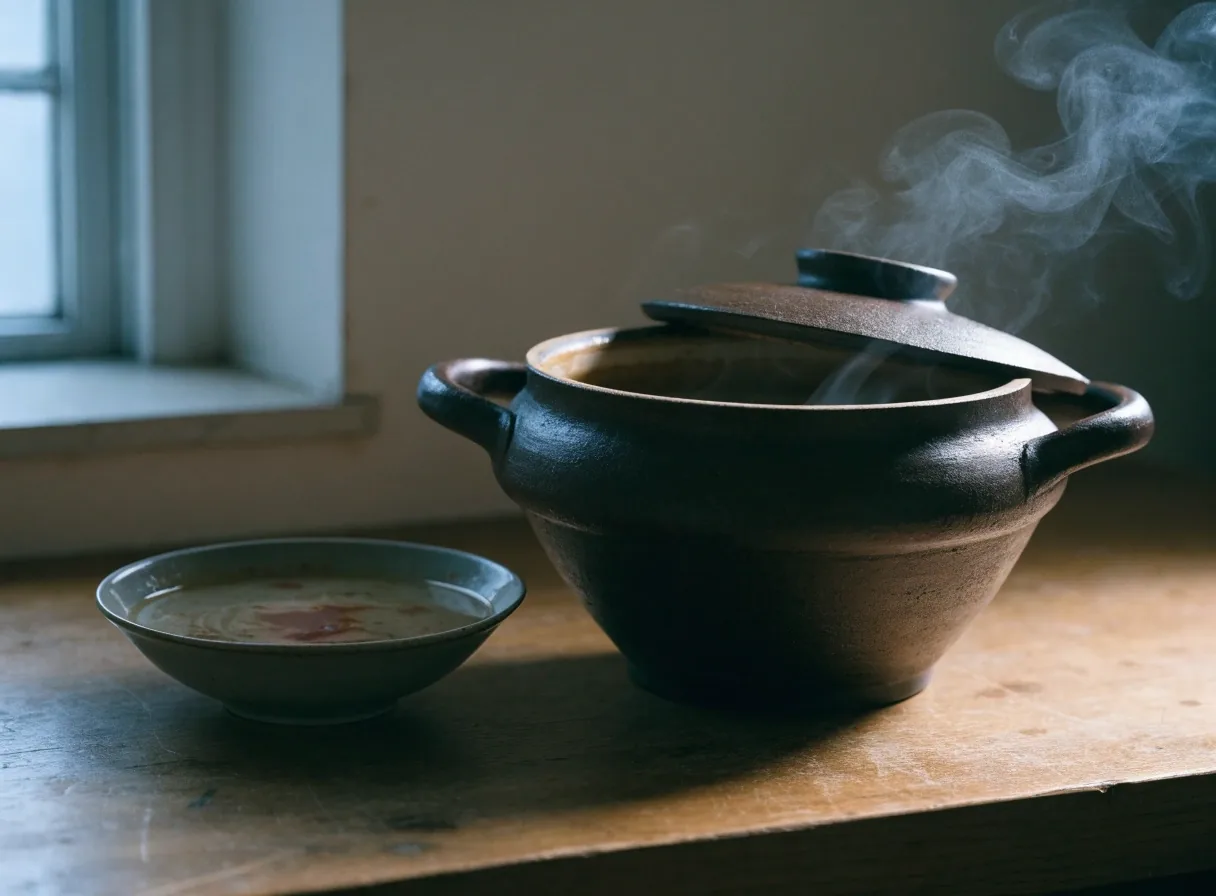
A bowl at rest on the counter. Notes here describe method and habit, not a promised result on your own stove.
Acceptable conduct
You agree not to attempt to disrupt the site, submit malicious code, or use the contact form for spam or unsolicited marketing. Automated scraping of the site's content is not permitted without written permission.
Cook and share
Use the recipes in your own home, teach them to a friend, and mention where you found them. That kind of use is what the journal is written for.
Ask before copying
Copying a full page, a photograph or a long passage onto another site or into a printed collection needs a note to us first. Short quoted lines with a credit are fine.
Keep the site clean
No attempts to break the site, no scripts sent to the mailbox, no bulk harvesting of the writing. If you spot a problem, tell us and we will look at it.
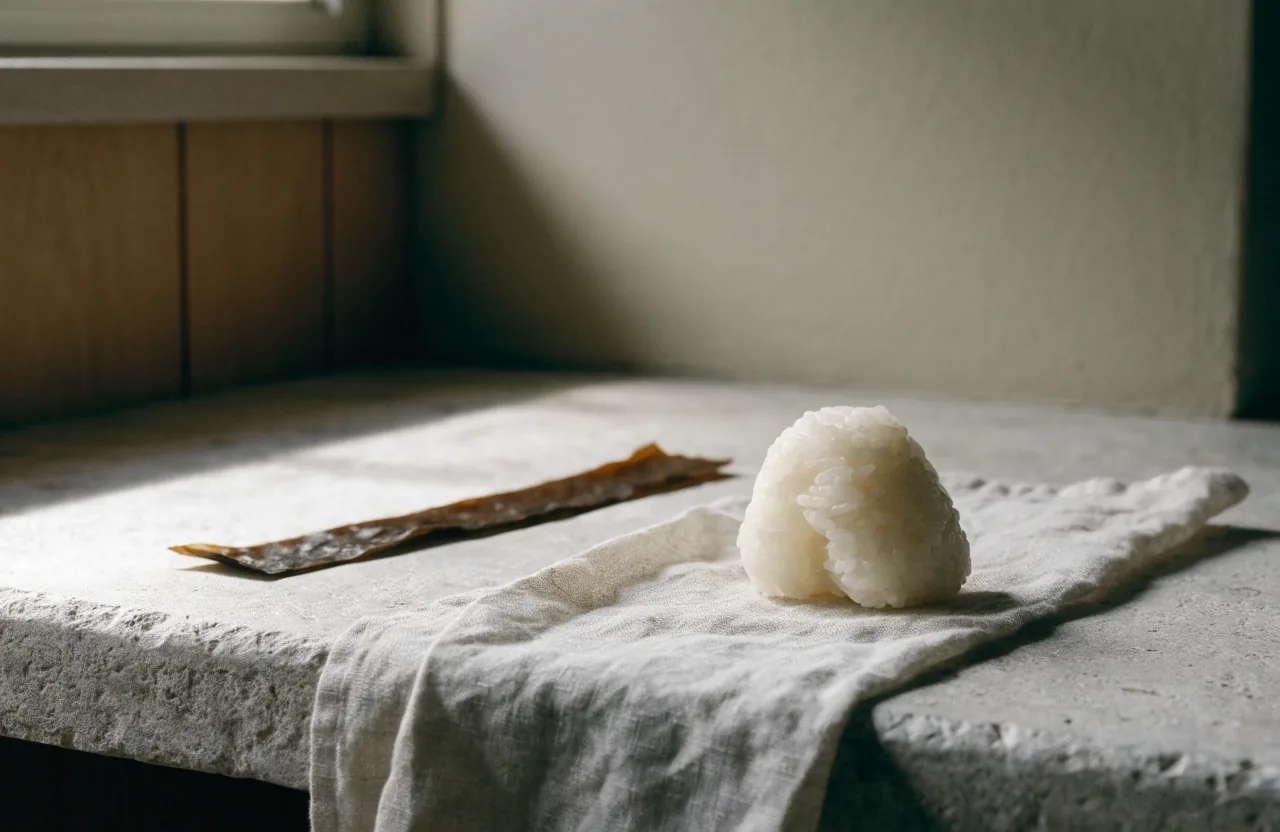
Finished onigiri, photographed in the journal's kitchen for one of the culinary history notes.
Intellectual property
Text, photographs, and other content on this site belong to the site or are used with permission. The writing on the culinary history blog, the recipe photographs, the simple kitchen tips drawn from years of cooking at home — all of it is made or gathered for this journal and it stays with the journal.
Trademarks and brand names mentioned in recipes remain the property of their respective owners. When a note refers to a style of pan, a type of miso, or a shop that carries an ingredient, that reference is descriptive and carries no claim over the name.
Nothing in these terms transfers ownership of any content to you. Reading here gives you a personal licence to cook from the material, not a right to hold, sell, or claim it.
Third-party links
The site may link to external pages for reference — a source on baking notes UK technique, a museum archive on the history of rice, a supplier of a particular ingredient. Those sites are not under this site's control, and their terms and privacy practices apply when you visit them.
Links are not endorsements and no responsibility is taken for third-party content. If a link stops working or leads somewhere unexpected, tell us and we will review it.
Where a link might take you
- A historical archive on the origins of a dish
- A reference on traditional Japanese ingredients and their season
- A note on British culinary traditions kept in a comparable journal
We link out only when a page adds something the note here does not cover. If it changes hands or goes quiet, we take the link down.
Changes and governing terms
These terms may be updated when the site or applicable law changes. The current version is always the one published here, and the date at the top of the page tells you when it last moved.
Continued use of the site after an update means you accept the revised terms. If you do not agree with a change, the remedy is simply to stop using the site — nothing here obliges you to stay.
One point worth knowing: recipes and notes are for reading and for cooking at home. There is no account to hold, no agreement to renew, and no continuing obligation on either side beyond the use of the material itself.
Common questions about these terms
Can I print a recipe for my own kitchen?
Yes. Print as many pages as you like for personal and household use, and keep them in your own folder or notebook. The limit is on republishing, not on reading or cooking.
May I quote a paragraph on my own site?
Short quotations with a link back to the page you took them from are permitted. If the quoted passage is more than a few lines, or if it is the substance of the piece, write to us first and describe how it will be used.
Does the journal accept guest notes?
We read pitches sent to the journal mailbox and occasionally publish a note that fits the seasonal cooking guide or the history section. Send the idea, not the finished piece, and we will answer if it fits the calendar.
What if I find something inaccurate?
Write to the journal and point at the page and the line. Corrections are welcome, especially from cooks working from the same recipes in different kitchens and different seasons.
Where to go next
The terms cover how you use the material. Two other pages explain how the journal is run and how your details are handled.
- [email protected]
- Post
- 1-8-11 Yukinoshita, Kamakura, Kanagawa 248-0005, Japan
- Reading hours
- Monday to Friday, 9:00 AM – 6:00 PM
Back to the counter
The terms are the fine print. The cooking is the point.
Everyday home meals, a seasonal cooking guide, notes on the food that came before us — it is all open to read. Start with whatever is in season where you are.